
“After years of struggling with acne scars, microneedling at SKIN has finally given me smoother, more even skin. The specialist was incredibly knowledgeable and made me feel completely at ease.”
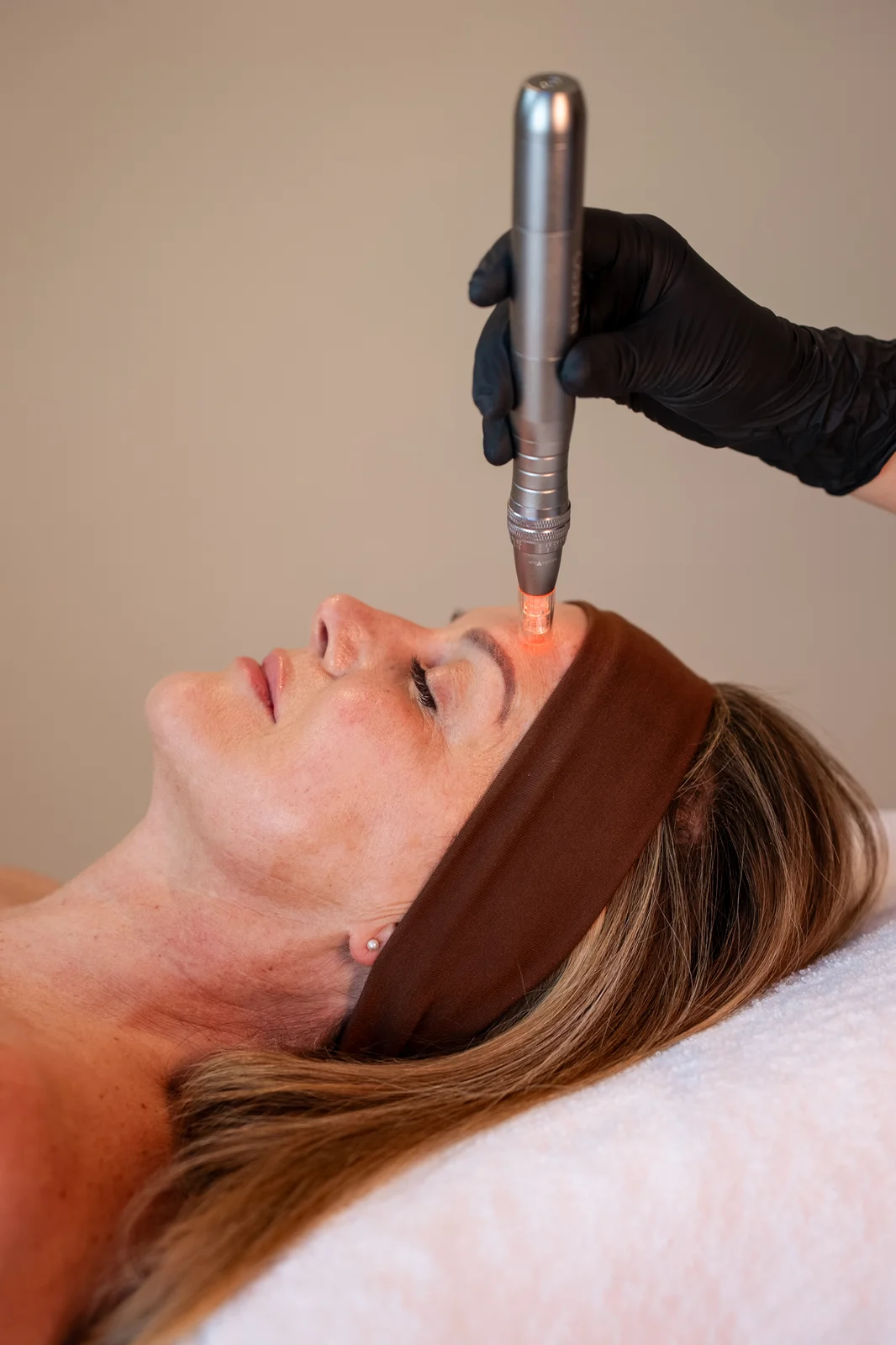
Microneedling
Microneedling triggers your skin’s natural repair process by creating controlled micro-injuries. Effective for acne scars, fine lines, stretch marks and uneven texture.
Treatment time
45-60 min
Suitable for
most skin types
Results
optimal after several weeks
Downtime
1–2 days of redness
- Consult before your first treatment
- Cancel free of charge up to 24 hours in advance
- No treatment without a personal skin analysis
What is Microneedling and who is it for?
Microneedling triggers your skin’s natural repair process by creating controlled micro-injuries. Effective for acne scars, fine lines, stretch marks and uneven texture.
4.9 Google Rating
Based on 500+ reviews
What our clients say
“Impressive results after just three microneedling sessions. My skin texture has improved significantly and the fine lines around my eyes are noticeably reduced. Very professional clinic.”
Trustworthy & transparent
Prices
Personal advice and a tailored treatment included with every booking.
Microneedling Face
Add-ons
LED Therapy15min
+ €25
Neck15min
+ €30
Neck + Décolleté30min
+ €70
Chemical Peel15min
+ €40
PRX T-3315min
+ €40
Exosomen15min
+ €50
Polynucleotiden / Zalm-DNA15min
+ €50
What's included:Personal consultation and treatment tailored to your skin and goals. Performed by certified skin specialists. No hidden costs.
Step by step
What can you expect?
Every skin reacts differently. Below you will find an overview of what you can expect before, during and after the treatment.
Before treatment
Preparation
Stop retinol, exfoliants and acids at least 7 days beforehand.
Treatment
Microneedling
Micro-fine needles create thousands of controlled punctures that activate collagen and elastin production.
Aftercare
Short recovery
Redness and mild swelling are normal and subside within 1-2 days. Avoid exercise and use only approved recovery products.
Recovery
Building results
After 2-4 weeks, the skin feels noticeably firmer. Six sessions spaced 2-4 weeks apart deliver the best results, followed by quarterly maintenance.
Who is this treatment for?
Suitable for
- Fine lines and wrinkles
- Atrophic acne scars
- Enlarged pores
- Hyperpigmentatie
- Striae
- Huidverslapping
Not suitable for
- Active acne
- Skin infections
- Rosacea, eczema or psoriasis
- Tendency towards keloid formation
- Pregnancy or breastfeeding
- Use of blood thinners
- Recent laser or chemical peel
Frequently Asked Questions
What is microneedling and how does it work?
Microneedling is a non-surgical skin rejuvenation procedure in which fine needles are used to create microscopic punctures in the skin. This process stimulates the body's natural healing response, leading to the production of collagen and elastin — two important proteins responsible for skin firmness and elasticity. The procedure is performed using a device containing small needles. These needles are rolled or stamped over the skin surface to create controlled micro-injuries. These "micro-wounds" activate the skin's natural repair process, replacing damaged tissue with new, healthy tissue. The increase in collagen and elastin results in a smoother, firmer and more even skin texture. Microneedling can help reduce fine lines, wrinkles, acne scars, enlarged pores, pigmentation and other skin conditions. It can also improve the absorption of skincare products, as the micro-channels created by the needles make it easier for active ingredients to penetrate deeper into the skin layers.
What are the benefits of microneedling for the skin?
Microneedling offers numerous benefits, although it is essential to have the treatment performed by a qualified professional for optimal results and to prevent complications. Benefits include: * Stimulation of collagen and elastin production: By activating the skin's natural healing process, microneedling stimulates the production of collagen and elastin, resulting in firmer, more supple skin. * Reduction of fine lines and wrinkles: The increase in collagen and elastin helps firm the skin and reduce fine lines and wrinkles. * Improvement of skin texture: Microneedling can improve overall skin texture by reducing enlarged pores and evening out irregularities. * Treatment of acne scars: Microneedling can help reduce the visibility of atrophic acne scars by stimulating collagen production and promoting new tissue formation. * Reduction of pigmentation: Microneedling can reduce hyperpigmentation and skin discolouration by stimulating cell renewal and evening out skin tone. * Improved effectiveness of skincare products: The micro-channels created during microneedling can improve the penetration of active ingredients, making skincare products more effective. * Treatment of stretch marks: Microneedling can help reduce stretch marks by stimulating collagen production and promoting new tissue formation. * Minimally invasive and safe: Compared to some other skin rejuvenation treatments, microneedling is a minimally invasive and safe option for most skin types. * Short recovery time: Recovery after microneedling is generally short, with only mild redness and swelling that usually disappears within a few days.
Which skin concerns is microneedling suitable for?
Microneedling is an effective and minimally invasive skin rejuvenation treatment that has grown in popularity in recent years. This versatile procedure is suitable for addressing a wide range of skin concerns, including: * Fine lines and wrinkles: Microneedling helps reduce fine lines and wrinkles by stimulating collagen and elastin production, making the skin firmer and smoother. * Acne scars: Atrophic acne scars, caused by collagen loss during acne healing, can significantly improve with microneedling. The treatment promotes new tissue and collagen formation, helping to reduce the appearance of scars. * Enlarged pores: Microneedling can help reduce enlarged pores by stimulating collagen production around the pores, leading to a tighter, smoother skin texture. * Hyperpigmentation: By promoting cell renewal and evening out skin tone, microneedling can help reduce hyperpigmentation, such as age spots, sun spots and melasma. * Stretch marks: Microneedling can effectively reduce stretch marks by stimulating collagen production and promoting new tissue formation. * Skin laxity: As the skin ages, it can lose elasticity and begin to sag. Microneedling can help reduce skin laxity by stimulating collagen and elastin production.
Are there contraindications or risk factors associated with microneedling?
Microneedling is considered a safe and minimally invasive procedure. However, there are some contraindications and risk factors to consider. #### Contraindications: * Active acne: People with active acne should avoid microneedling, as it may worsen inflammation and spread infection. * Skin infections: Microneedling should not be performed on skin with open wounds, bacterial or viral infections such as herpes or impetigo. * Rosacea, eczema and psoriasis: People with these inflammatory skin conditions should be cautious with microneedling, as it may worsen inflammation. * Keloid or hypertrophic scars: People prone to developing abnormal scars should avoid microneedling, as it may potentially cause more scar tissue. * Pregnancy and breastfeeding: Microneedling should be avoided during pregnancy or breastfeeding, as hormonal changes can affect skin sensitivity. * Blood thinners or certain medications: People using blood thinners or certain medications such as isotretinoin should avoid microneedling due to increased risk of bleeding or other complications. * Recent laser treatments or chemical peels: It is important to allow sufficient time between microneedling and other aggressive skin treatments to minimise the risk of irritation or damage. #### Risk factors: * Infection: Although rare, there is a small risk of bacterial or viral infections resulting from the micro-wounds caused by microneedling. * Scarring: In rare cases, microneedling may lead to new scar formation, especially in people prone to keloid or hypertrophic scars. * Hyperpigmentation: There is a small risk of developing post-inflammatory hyperpigmentation after microneedling, especially in people with darker skin tones. * Insufficient results: Some people may be disappointed with results, particularly if they have unrealistic expectations or if the treatment is not suitable for their specific concern. To minimise risks and achieve optimal results, it is important to choose a clinic experienced in microneedling.
How many treatments are needed to see results and how often should they be performed?
The number of microneedling treatments needed to see visible results varies depending on the skin condition and individual goals. Generally, multiple treatments are required for optimal results. For mild skin concerns such as fine lines, wrinkles and light hyperpigmentation, 3 to 5 treatments may be sufficient. For more severe concerns such as deep acne scars, stretch marks or significant hyperpigmentation, at least 6 to 8 treatments or more are needed. Treatments are typically performed at intervals of 2 to 6 weeks, depending on the depth, to give the skin sufficient time to heal and stimulate collagen and elastin production. It is important to follow your practitioner's recommendations and not schedule treatments too close together, as this may increase the risk of skin irritation or damage. After the initial series of treatments, maintenance sessions may be needed — usually every 6 to 12 months — to sustain results. The exact frequency depends on your individual skin condition and desired outcomes. Keep in mind that microneedling results become gradually visible as the skin renews itself and produces more collagen and elastin. Improvements in skin texture and the appearance of scars or other concerns may become visible several weeks to months after the treatment.
What are possible side effects or discomfort after a microneedling treatment?
Most side effects are mild and resolve on their own within a few days to a week. If you experience persistent or severe side effects, it is important to contact your practitioner. The most common temporary side effects include: * Redness: The skin may be red immediately after the treatment, similar to sunburn. This redness usually fades within 24 to 48 hours, but may persist for a few days in some people. * Swelling: Mild swelling may occur after the treatment, especially around the eyes and face. This usually subsides within a few days. * Sensitivity: The treated skin may feel sensitive, similar to a sunburn sensation. This usually disappears within a few days. * Peeling or dryness: The skin may become somewhat flaky or dry in the days following the treatment. This is normal and can be relieved by applying a moisturiser. * Bruising: Although rare, small bruises may occur, especially in people who use blood thinners or have sensitive skin. Bruises usually disappear within a week. * Itching: Some people may experience mild itching during the healing process. It is important not to scratch, as this can increase the risk of infection or scarring. * Infection: Although rare, there is a small risk of bacterial or viral infections resulting from the micro-wounds. It is important to carefully follow aftercare instructions to minimise infection risk.
How long is the recovery after microneedling and what aftercare is needed?
Recovery after microneedling is generally short, with most people able to resume normal activities immediately after the procedure. The skin may be red and sensitive immediately after the treatment, similar to a graze, but this usually subsides quickly. Here are some aftercare tips to promote recovery and ensure optimal results: * Avoid sun exposure: Protect your skin from direct sunlight for at least 48 hours after the treatment. Wear a hat and apply broad-spectrum sunscreen (SPF 30 or higher) to protect against harmful UV rays. * Hydrate your skin: Keep your skin hydrated by regularly applying a moisturiser as recommended by your practitioner. This helps reduce dryness, peeling and discomfort. * Avoid aggressive skincare products: Avoid products containing irritating ingredients such as alcohol, retinoids or glycolic acid for at least 3 to 5 days after the treatment, or as recommended by your practitioner. * No makeup: It is recommended not to apply makeup to the treated area for at least 24 hours to prevent possible irritation or infection. * Do not scratch or pick: Resist the urge to scratch or pick at your skin during the healing process, as this can increase the risk of infection or scarring. * Cold compresses: If you experience swelling, you can apply a cold compress to the treated area to relieve discomfort. It is important to follow recommendations and contact your practitioner if you experience persistent or unusual side effects. Although most people recover quickly after microneedling, individual experiences may vary.
What before and after results can I expect from microneedling?
Microneedling is an effective treatment for addressing various skin concerns, but it is important to have realistic expectations about the results. Some before and after expectations: * Expect improvement in skin texture, with a smoother, firmer and more refined appearance. The skin may also look more radiant and fresher. * Reduction of fine lines and wrinkles. While deeper wrinkles are unlikely to disappear completely, they can become less noticeable after multiple treatments. * Reduction of acne scars and other scars. While some scars may not disappear entirely, they generally become less noticeable and blend better with surrounding skin. * Reduction of hyperpigmentation such as sun spots, age spots and melasma. These discolourations can become lighter and less prominent after treatment. Results vary depending on individual skin condition, the concern being treated and the number of treatments performed. Multiple treatments are needed for optimal results. Your practitioner will create a personalised treatment plan based on your specific needs and desired outcomes. Keep in mind that while microneedling is effective for improving skin condition, it is not a replacement for a healthy skincare routine and preventive measures such as wearing sunscreen and avoiding harmful factors like smoking and excessive sun exposure.
What are the costs of microneedling and is it covered by health insurance?
The cost of a single microneedling session ranges from €120 to €200, but this can vary by method and treatment zone. Packages with multiple sessions are offered at a reduced rate, as multiple treatments are usually needed for optimal results. Regarding health insurance coverage, this varies depending on your specific insurance and policy terms. Microneedling is often considered a cosmetic or aesthetic treatment and is usually not covered by basic insurance. However, some supplementary insurance policies may offer partial or full coverage for microneedling, especially if the treatment is performed for medical reasons such as reducing acne scars. It is important to contact your health insurer to check whether microneedling is covered in your specific situation and to understand which conditions apply to reimbursement.
What is the difference between a dermapen and microneedling?
Dermapen and microneedling are closely related terms that are often used interchangeably, but there is an important difference. Microneedling is the treatment, while a dermapen is the name of a specific device used to perform microneedling. The dermapen is a popular microneedling device with a pen-like shape containing automatic needles. The device is moved across the skin surface and uses vibrating, vertically moving needles to puncture the skin. The dermapen reduces treatment time, minimises discomfort and offers a more controlled and consistent treatment compared to manual microneedling devices.
Ready for your first Microneedling?
Book now and see the results before you leave the clinic.
- Consult before your first treatment
- Cancel free of charge up to 24 hours in advance
- No treatment without a personal skin analysis
or